From Cumbersome Excel Sheets to a Streamlined Digital Portal
Baxter International Inc. is an American multinational healthcare company focused on products to treat chronic and acute medical conditions. Their nephrologists and administrative staff were managing payroll validation through a cumbersome Excel-based system — leading to manual errors, lengthy search times, and reduced productivity.
The goal was to design a digital portal that streamlined payroll validation workflows, reduced manual effort, and allowed nephrologists to focus on what matters most: patient care.
Legacy Excel Workflows Were Slowing Critical Operations
The existing system relied entirely on spreadsheets for payroll validation. A centralized portal was needed — one that matched how nephrologists actually work.
The Excel Reality
- Many files to review — navigating sheets was complex and time-consuming
- Difficulty locating important information led to lengthy searches
- Limited pathways with cluttered interfaces and suboptimal information architecture
- Manual errors introduced risk into monthly nephrologist settlements
- Strong resistance to change from users accustomed to the familiar system
The Digital Vision
- Single source of truth for all payroll validation data
- Clear, structured layout that reduced cognitive load
- Automated validation to eliminate manual errors
- Aligned with existing workflows to minimize disruption
- Data accuracy and security built into the foundation
Understanding the Needs of Nephrologists & Administrative Staff
Nephrologists needed a faster, more transparent way to review and approve payroll without getting bogged down in administrative tasks. Administrative teams required tools that minimized manual errors and improved workflow efficiency.
Research Methods- Card Sorting — to understand how users mentally organize payroll data
- Ideation & Sketching — to rapidly explore potential design directions
- Prototyping — to validate flows before committing to high-fidelity design
"When I am a nephrologist managing payroll, I want to efficiently validate payroll data without excessive manual effort, so I can ensure accuracy and focus on more critical tasks."
Three Research Pillars Drove Every Decision
Using design sprint, design thinking, and lean principles, we structured the approach around three pillars that converted observed pain points into targeted, actionable design improvements.
Problem Framing
Developed a clear understanding of the problems users face, ensuring solutions were well-targeted and effective — not just aesthetically improved versions of the old Excel system.
Identify Pain Points
Discovered existing challenges in the customer journey — from file navigation to data consolidation — and converted them into specific, actionable areas for design improvement.
Gain User Insights
Combined design sprint, design thinking, and lean principles to foster a comprehensive understanding of user needs, values, challenges, and limitations throughout the project.
A Clean, Centralized Portal Built Around Real Workflows
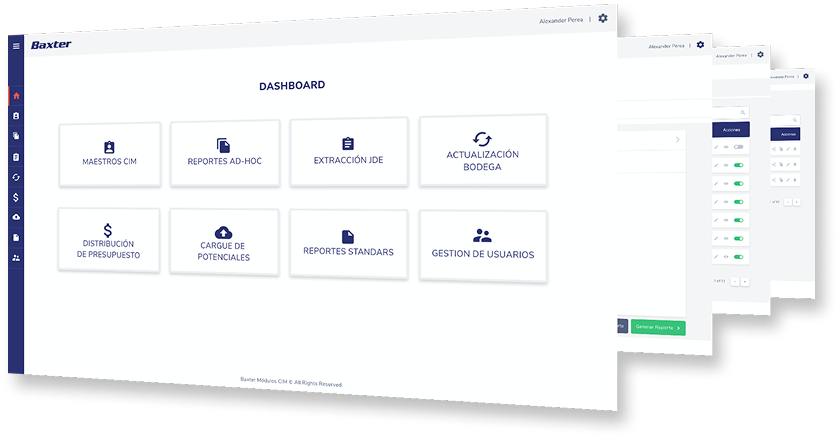
The new Baxter portal replaced the Excel system with a structured, role-based digital interface. A clean sidebar navigation, clear data tables, and automated validation replaced manual lookups and consolidation entirely.
Three key user types
Nephrologists, administrative staff, and finance managers each had different relationships to the payroll data — the portal had to serve all three without forcing compromises.
Nephrologist
Reviews and approves monthly payroll settlements. Needs a clear, fast way to validate data without being pulled away from patient care responsibilities.
Administrative Staff
Manages operational workflows, budget distribution, and data entry. Needs tools that minimize manual effort and eliminate the risk of payroll processing errors.
Finance Manager
Reviews consolidated reports and analytics. Needs high-level visibility into payroll distribution and structured data export for compliance reporting.
Transforming Complexity into Clarity
Faster Payroll Validation
Automated consolidation and structured data views eliminated time-consuming manual lookups, reducing validation time significantly for every settlement cycle.
Reduced Administrative Burden
Nephrologists no longer needed to cross-reference multiple Excel files. The portal centralized all data into a single, role-based interface matching their workflow.
Improved Workflow Efficiency
Administrative staff reported significantly improved accuracy and reduced error rates. Rapid design sprint iterations enabled quick validation and continuous refinement.
Key Takeaways
Addressing actual pain points — not assumed ones — resulted in significant workflow improvements. Understanding the job before designing the solution made all the difference.
Collaboration is Key
Close coordination with stakeholders at every sprint cycle ensured the solution met all objectives and gained adoption — not just approval — from the teams who'd use it daily.
User-Centered Design Drives Success
Addressing actual pain points — not assumed ones — resulted in significant workflow improvements. Understanding the job before designing the solution made all the difference.
Rapid Iteration Enhances Outcomes
Design sprints enabled quick validation and refinement, preventing costly rework and keeping the team aligned with evolving user needs throughout the six-month engagement.